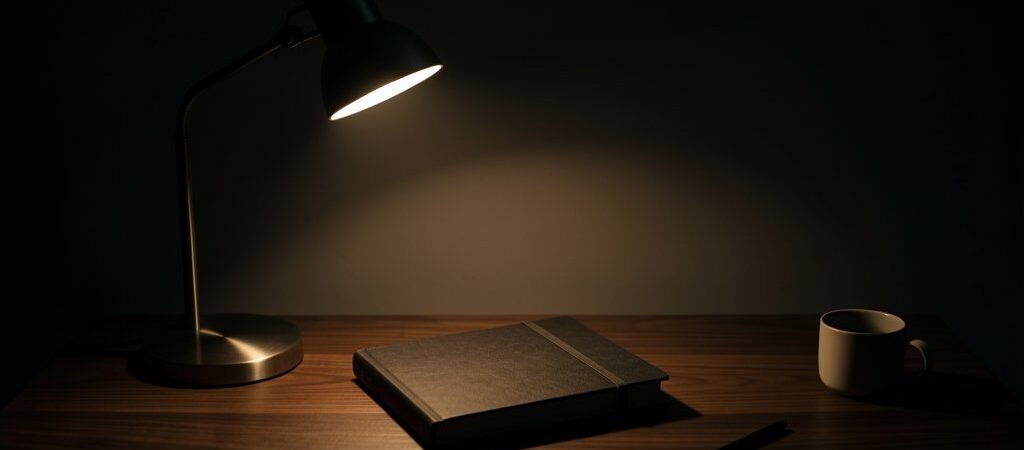
Most people manage their morning light completely wrong — and it quietly undermines their focus, energy, and cognitive performance for the first hours of the workday before they have even sat down at their desk.
Light is the primary regulator of your circadian rhythm — your body’s internal clock that governs when you are alert, when you are cognitively sharp, and when your energy naturally peaks. According to Forbes’s research on high-performance morning routines, controlling light exposure in the first hour of the morning is one of the most direct levers available for setting cognitive state.
Here is how to use your bedroom and workspace environment to make your mornings sharper, faster to start, and more productive.
The Science: Why Morning Light Timing Matters
stress response — often framed negatively as a “stress hormone” — has a critical and entirely normal morning function: the stress response Awakening Response (CAR). In the 30–45 minutes after waking, stress levels naturally spike, priming alertness, activating working memory, and preparing the brain for complex cognitive tasks.
This spike is your brain’s natural performance window. The problem: most people immediately suppress it or delay it through behaviours that signal to the brain that it is not yet time to be awake — primarily by staying in a dark room on a phone or in heavy blackout conditions without any deliberate transition to bright light.
The Bedroom Setup: Controlled Darkness for Sleep, Timed Light for Waking
The goal is not to eliminate darkness — it is to control its timing.
Blackout Curtains for Sleep Quality
Complete darkness during sleep significantly improves sleep depth and duration. Even small amounts of light during sleep can disrupt melatonin production and REM cycle quality.
- IKEA FJÄDRAR blackout curtain liner — budget option, attaches to existing curtains, effective light blocking
- NICETOWN 100% Blackout Curtains — popular, widely available, good range of sizes
- Bloc Blinds made-to-measure blackout — if standard sizes do not fit your windows
Smart Wake-Up Lighting
Rather than waking abruptly in full darkness (which delays the stress response response and produces grogginess), use a light alarm that begins a gradual brightening 20–30 minutes before your target wake time — simulating a natural sunrise.
- Philips SmartSleep Wake-Up Light — the most research-supported option, clinically tested for improving morning alertness
- Lumie Bodyclock — UK-engineered sunrise simulation lamp with radio and sunset modes
- Govee Smart Bulb + Alexa/Google routine — budget alternative, set a gradually brightening light routine via smart speaker
The First 30 Minutes: Morning Light Protocol
The highest-impact morning habit available for cognitive performance is simple and free: get bright light in your eyes within 30–60 minutes of waking.
- Go outside — even 10 minutes of morning natural light exposure anchors your circadian rhythm and triggers the stress response response effectively. This is the most powerful option and costs nothing
- Open all curtains immediately on waking — if going outside is not possible, maximise indoor natural light exposure as quickly as possible
- Use a bright light wellness practice lamp — during winter or in low-light regions, a 10,000 lux wellness practice lamp delivers the equivalent of outdoor morning light indoors. The Lumie Brazil or Beurer TL 30 are effective options
Workspace Morning Light Setup
Your desk environment in the morning should feel energising, not dim and cave-like:
- Use cool-white light (5000K–6500K) in your workspace during morning hours — this supports the alert, focused state your stress response peak primes you for
- Position your desk near a window to capture natural morning light directly
- Avoid working in dim, warm-lit conditions during your peak morning focus window — warm light signals the brain to wind down, not ramp up
- If using a smart bulb system, schedule your desk lamp to automatically switch to a bright, cool setting at your work start time
What to Avoid in the First Hour
- Phone in bed — the dim blue glow of a phone screen is not enough light to trigger the stress response response, but it is enough to begin filling your working memory with stimulation before it is ready. The result is a sluggish, reactive start rather than a focused proactive one
- Dark room desk work — working at your desk with blinds down and only a small screen for light suppresses morning alertness instead of building on it
- Skipping breakfast or hydration — mild dehydration in the morning measurably reduces concentration and increases perceived fatigue. A glass of water within 10 minutes of waking is one of the simplest high-return morning habits available
The Morning Workspace Ritual: A Complete Protocol
- 6:30am — Wake-up light begins gradual brightening
- 7:00am — Wake, open all curtains, drink water
- 7:05am — 10 minutes outside or in natural light (no phone)
- 7:30am — Desk lamp on (cool white 5000K+), review yesterday’s top 3 tasks
- 7:45am — First focused work block begins during stress response peak window
The dark room is a sleep tool. The bright morning is a focus tool. Using both — in deliberate sequence — is how you turn your bedroom and workspace environment into a performance system that works before you have made a single conscious decision about how to be productive.